

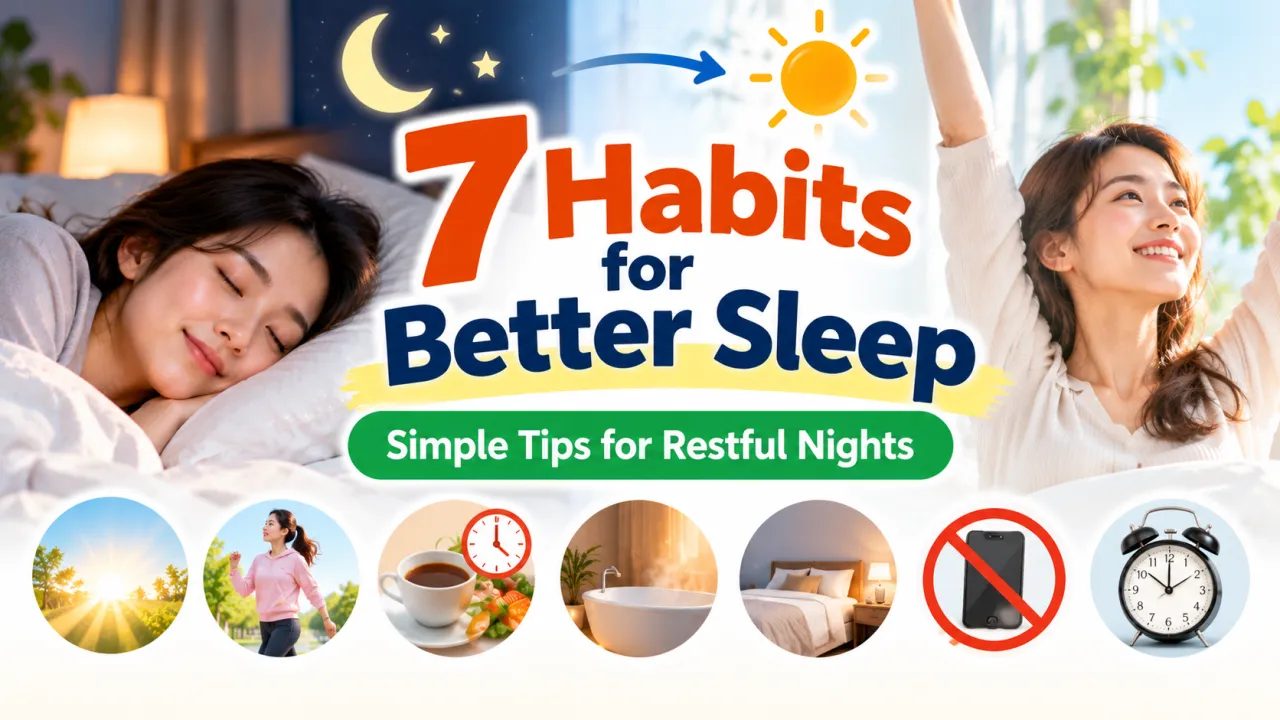
How to Improve Sleep Quality: 7 Habits for Better Sleep
Writer

Do you wake up feeling tired even after a full night’s sleep? Do you struggle to fall asleep, wake up frequently during the night, or find it difficult to feel refreshed in the morning?
Sleep plays an essential role in maintaining physical and mental health. It affects your energy levels, concentration, mood, and your body’s ability to recover from daily activities and exercise.
However, getting more sleep does not automatically guarantee better sleep. Sleep quality also matters, including how restful your sleep feels and whether you can function well throughout the following day.
The good news is that simple changes to your daily routine may help improve your sleep.
In this guide, we’ll explore seven practical habits that can help improve sleep quality, common bedtime mistakes to avoid, recommended sleep durations, and useful tips for building a healthier sleep routine.
These recommendations are based on guidance from Japan’s Ministry of Health, Labour and Welfare (MHLW) and the U.S. Centers for Disease Control and Prevention (CDC).
How Can You Improve Sleep Quality?
Before changing your bedtime habits, it’s helpful to understand what makes sleep restful.
Healthy sleep involves more than simply spending enough hours in bed. It also includes getting sufficient uninterrupted sleep and feeling reasonably refreshed when you wake up.
Three important areas to consider are:
- Sleep duration: Are you allowing enough time for the sleep your body needs?
- Sleep schedule: Do you maintain relatively consistent sleeping and waking times?
- Sleep environment: Is your bedroom quiet, comfortable, and suitable for restful sleep?
Japan’s Sleep Guide for Health Promotion 2023 emphasizes both sufficient sleep duration and a sense of feeling rested after sleeping, sometimes described as sleep-related restfulness.
If you regularly wake up feeling exhausted, experience frequent nighttime awakenings, or struggle with excessive daytime sleepiness, it may be worth reviewing your habits.
However, persistent sleep difficulties can sometimes be associated with medical conditions and may require professional evaluation.
7 Habits That Can Help Improve Sleep Quality
You don’t need to completely change your lifestyle overnight to develop healthier sleep habits.
Start with one or two realistic improvements and gradually build a routine that works for you.
1. Wake Up at a Consistent Time and Get Morning Sunlight
Your body has an internal biological clock, often called the circadian rhythm, which helps regulate when you feel awake and sleepy.
Light is one of the most important environmental signals affecting this internal clock.
Exposure to natural light in the morning helps your body recognize the beginning of the day and supports a more consistent sleep-wake schedule.
In contrast, dramatically changing your waking time between weekdays and weekends may disrupt your usual routine.
Try incorporating these habits:
- Wake up at approximately the same time each day.
- Open your curtains after waking up.
- Spend some time outdoors in natural daylight when practical.
- Build a regular morning routine around breakfast, commuting, or other activities.
- Avoid relying entirely on weekend catch-up sleep to compensate for consistently short nights.
For example, a short morning walk can provide both natural light exposure and gentle physical activity.
Even if your main concern is falling asleep at night, improving your morning routine can be a useful starting point.
2. Stay Physically Active During the Day
Regular physical activity is associated with better sleep outcomes, including improvements in sleep quality and sleep-related restfulness.
You do not necessarily need to participate in competitive sports or complete intense workouts.
Walking, cycling, swimming, strength training, and other activities can help you become more physically active.
Simple ways to introduce more movement include:
- Taking a 10–20 minute walk during your lunch break.
- Walking short distances instead of driving when practical.
- Including strength training appropriate for your fitness level.
- Taking movement breaks during long periods of sitting.
- Finding a recreational sport or activity you enjoy.
Consistency is more important than completing one unusually demanding workout.
However, vigorous exercise immediately before bedtime may make it harder for some people to relax or fall asleep.
If you notice that late-night workouts affect your sleep, try exercising earlier or reducing the intensity of your evening activity.
Choose an exercise schedule that supports both your sleep and overall health.
3. Review Your Evening Meals and Caffeine Intake
What you eat and drink can influence how comfortably you sleep.
Two factors worth paying particular attention to are heavy meals shortly before bedtime and the consumption of caffeine later in the day.
Caffeine is a stimulant found in products such as coffee, tea, energy drinks, and chocolate.
It can temporarily increase alertness, which may be useful during the day but undesirable when you are preparing to sleep.
People vary considerably in how sensitive they are to caffeine.
For caffeine-sensitive individuals, avoiding it for approximately five to six hours before bedtime may be a useful starting point. Some people may need an even longer interval.
Consider these practical tips:
- Avoid eating unusually large meals immediately before bed.
- Try to finish dinner with enough time to digest comfortably.
- Reduce caffeine intake during the afternoon or evening if it affects your sleep.
- Pay attention to caffeine in energy drinks, tea, and other products.
- If hunger makes sleeping difficult, consider a small, easily tolerated snack.
You do not need expensive sleep supplements or special foods to build a healthier sleep routine.
Start by improving your regular eating habits and observing how your body responds.
4. Make Your Evenings Dimmer and Your Mornings Brighter
Light exposure influences the body’s natural sleep-wake cycle.
Bright light during the day helps signal wakefulness, while a darker environment at night supports the transition toward sleep.
One practical approach is to create a clear difference between your daytime and evening environments.
For example:
- Seek natural daylight in the morning.
- Keep your daytime environment appropriately bright.
- Dim unnecessarily bright lights as bedtime approaches.
- Reduce exposure to bright screens late at night.
- Keep your bedroom dark enough to sleep comfortably.
You do not need to sit in complete darkness before bedtime. Make sure you retain enough light to move around safely.
The goal is to create an environment that helps your body distinguish between daytime activity and nighttime rest.
5. Create a Relaxing Bedtime Routine
A consistent wind-down routine may help you transition from a busy day to a more relaxed state before sleeping.
A warm bath can be one option.
Japan’s e-Health Net explains that bathing approximately one to two hours before bedtime may support sleep by affecting body temperature regulation.
However, extremely hot water and prolonged bathing can place unnecessary stress on the body.
Choose a comfortable water temperature and bathing duration based on your health and preferences.
Other relaxing activities may include:
- Listening to calm music.
- Practicing slow, comfortable breathing.
- Doing light stretching without pain or strain.
- Reading a book.
- Spending a few quiet minutes away from work-related tasks.
The purpose of a bedtime routine is not to force yourself to sleep immediately.
Instead, it is to create a consistent transition that allows you to relax before bed.
If a particular activity makes you feel more alert rather than relaxed, choose something else.
6. Reduce Screen Time and Avoid Using Alcohol as a Sleep Aid
Smartphones, tablets, and other electronic devices can interfere with sleep habits in several ways.
Bright screen exposure may affect your body’s internal clock, while stimulating content, notifications, or social media activity can make it harder to wind down.
Consider reducing unnecessary screen use before bedtime.
The CDC suggests turning off electronic devices at least 30 minutes before sleeping as one practical sleep-hygiene habit.
You might also try:
- Turning off nonessential notifications.
- Keeping your phone away from your pillow.
- Choosing relaxing activities instead of scrolling through social media.
- Avoiding stressful work messages immediately before bedtime.
Alcohol is another factor worth considering.
Although alcohol may make some people feel sleepy initially, it can disrupt sleep later in the night and reduce overall sleep quality.
Using alcohol to help yourself fall asleep is not recommended as a sleep-improvement strategy.
Instead, focus on consistent routines and a comfortable sleeping environment.
7. Keep a Consistent Sleep Schedule and Improve Your Bedroom Environment
Your bedroom should be a place where you can rest comfortably.
Factors such as temperature, lighting, noise, and bedding may all influence your sleeping experience.
Review the following conditions:
- Temperature: Keep your room comfortably cool or warm according to the season and your needs.
- Lighting: Reduce unnecessary light while sleeping.
- Noise: Address disruptive sounds whenever possible.
- Bedding: Use a mattress and pillow that feel comfortable and supportive.
- Routine: Maintain relatively consistent sleeping and waking times.
There is no single bedroom temperature or mattress type that is perfect for everyone.
Personal preferences, health conditions, climate, and individual comfort all matter.
It is also important to allow enough time for sleep rather than relying on a comfortable bedroom alone.
A good environment supports sleep, but it cannot fully compensate for consistently insufficient sleeping time.
How Many Hours of Sleep Do You Really Need?
Sleep needs vary depending on age, health, lifestyle, and individual differences.
Different public health organizations express their recommendations somewhat differently.
For example, Japan’s Sleep Guide for Health Promotion 2023 recommends that adults generally secure at least six hours as a reference point while emphasizing individual sleep requirements and feeling rested.
However, six hours should not be interpreted as sufficient sleep for every adult.
For international readers, the U.S. CDC provides the following age-based recommendations:
| Age Group | Recommended Daily Sleep |
|---|---|
| School-age children (6–12 years) | 9–12 hours |
| Teenagers (13–17 years) | 8–10 hours |
| Adults (18–60 years) | 7 hours or more |
| Adults (61–64 years) | 7–9 hours |
| Adults (65 years and older) | 7–8 hours |
These are general public health recommendations, not exact requirements for every individual.
Sleep quality also matters.
Pay attention to whether you wake up feeling rested, experience unusual daytime sleepiness, or have difficulty concentrating.
Spending excessive time in bed does not necessarily lead to better sleep. The goal is to find a healthy balance between adequate sleep duration and restful sleep.
Common Habits That May Reduce Sleep Quality
Improving your sleep is not only about adding new habits. It can also involve reducing behaviors that interfere with restful sleep.
| Habit to Review | Practical Improvement |
|---|---|
| Sleeping much later on weekends | Keep wake-up times relatively consistent |
| Using your phone until bedtime | Reduce screen time and notifications before sleep |
| Drinking caffeine late in the day | Adjust the timing and amount of caffeine |
| Using alcohol to fall asleep | Choose healthier relaxation habits |
| Doing intense exercise immediately before bed | Adjust workout timing or intensity if it affects sleep |
| Eating unusually large meals late at night | Review dinner timing and portion sizes |
| Sleeping in an uncomfortable environment | Improve room temperature, light, and noise conditions |
Choose one habit that applies to you and experiment with a realistic improvement.
Rather than judging results after a single night, observe how your sleep and daytime well-being change over time.
A Simple Daily Routine for Better Sleep
The following example shows how healthy sleep habits can fit into an ordinary day.
| Time of Day | Recommended Habit |
|---|---|
| Morning | Wake up at a consistent time and get natural daylight |
| Daytime | Stay physically active and avoid prolonged inactivity |
| Afternoon | Review caffeine intake, especially if you are sensitive to it |
| Evening | Plan your dinner and allow time to relax |
| Before bedtime | Dim bright lights, reduce unnecessary screen time, and prepare your bedroom |
| Night | Allow enough time for sleep based on your individual needs |
This is a general example, not a strict schedule.
People who work night shifts or rotating schedules may need different strategies based on their responsibilities and opportunities for sleep.
Adapt these recommendations to your circumstances instead of trying to follow an unrealistic routine.
How Are Exercise and Sleep Connected?
Exercise and sleep are closely connected aspects of healthy living.
Regular physical activity may support better sleep, while inadequate sleep can affect energy levels, concentration, and physical performance.
For people who participate in sports or strength training, sufficient sleep is also an important part of recovery.
For example, a person who exercises regularly but consistently sleeps too little may struggle with fatigue and reduced daytime alertness.
At the same time, someone who sleeps adequately but spends most of the day inactive may benefit from gradually increasing their physical activity.
A balanced approach should consider three important areas:
- Nutrition: Eating a varied diet that provides sufficient energy and essential nutrients.
- Physical activity: Moving regularly at an appropriate level.
- Recovery: Allowing adequate sleep and rest between activities.
Rather than concentrating on only one habit, try building a lifestyle that supports all three.
Frequently Asked Questions About Sleep Quality
Q. What Is the First Thing I Should Do to Improve My Sleep?
A practical starting point is to keep your waking time relatively consistent and get natural daylight in the morning.
At the same time, check whether you are allowing enough time for sleep and whether your bedroom is comfortable.
Choose improvements that address your actual sleeping habits rather than trying every possible tip at once.
Q. Does Stretching Before Bed Help You Sleep Better?
Gentle stretching may be a useful part of a relaxing bedtime routine.
Choose movements that feel comfortable and avoid stretching to the point of pain.
However, stretching alone is not guaranteed to resolve sleep difficulties, and stronger evidence is available for broader habits such as maintaining a consistent schedule and avoiding sleep-disrupting behaviors.
Q. Is Six Hours of Sleep Enough if I Wake Up Feeling Fine?
Not necessarily.
Feeling rested is important, but it is not the only consideration when evaluating whether you are getting enough sleep.
The CDC recommends seven or more hours for adults aged 18–60.
Regularly sleeping less than recommended may carry health risks even when someone does not notice obvious daytime sleepiness.
Consider your overall health, daytime functioning, and individual sleep needs.
Q. Is It Normal to Wake Up During the Night?
Occasional nighttime awakenings are common.
However, frequent awakenings that leave you feeling exhausted or affect your daytime activities may indicate a sleep problem.
If the issue continues, consider speaking with a healthcare professional.
Q. Can Food or Supplements Improve Sleep Quality?
A balanced diet supports overall health, but no single food or supplement can guarantee better sleep.
Before relying on supplements, review your usual eating habits, caffeine intake, sleep schedule, and bedroom environment.
Some supplements may interact with medications or be unsuitable for certain health conditions. Consult a qualified professional when appropriate.
Q. When Should I Seek Medical Advice About Sleep Problems?
Consider seeking medical advice if you regularly have difficulty falling asleep, wake repeatedly during the night, experience excessive daytime sleepiness, or feel persistently unrefreshed.
Loud snoring, observed pauses in breathing during sleep, or waking while gasping for air may be signs of sleep apnea and should be evaluated by a healthcare professional.
Healthy habits are valuable, but they do not replace appropriate medical assessment and treatment.
Conclusion: Better Sleep Starts With Everyday Habits
Improving sleep quality does not require complicated equipment or a complete lifestyle transformation.
Simple, consistent changes to your daily routine can create better conditions for restful sleep.
Here are the seven habits covered in this guide:
- Wake up consistently and get morning sunlight.
- Stay physically active during the day.
- Review evening meals and caffeine intake.
- Keep evenings dimmer and mornings brighter.
- Create a relaxing bedtime routine.
- Reduce screen time and avoid alcohol as a sleep aid.
- Maintain a consistent sleep schedule and comfortable bedroom environment.
Remember that sufficient sleep duration is just as important as good sleep habits.
Start with something manageable, such as reducing screen time before bed, taking a short walk during the day, or maintaining a more regular wake-up schedule.
Small improvements, practiced consistently, can help you build a healthier relationship with sleep and support your overall well-being.
References and Further Reading
-
Japan Ministry of Health, Labour and Welfare – Sleep Guide for Health Promotion 2023 (Japanese and English)
-
Japan Ministry of Health, Labour and Welfare – Sleep and Lifestyle Habits (Japanese)
-
U.S. Centers for Disease Control and Prevention – About Sleep
-
National Heart, Lung, and Blood Institute – Sleep Apnea Symptoms
Disclaimer: This article provides general educational information about sleep and healthy living. It is not intended to diagnose or treat medical conditions or replace personalized medical advice. If you have persistent sleep difficulties, an underlying medical condition, or concerns about your health, consult a qualified healthcare professional.